
How to get your kids boating
Sharing your love of boating with your children creates memories that last a lifetime. But what if they're not quite as enthusiastic about boats as you are? Whether you're dealing with reluctance, nerves, or simply a lack of interest, there are practical ways to spark that passion for the water.
Understanding the obstacles
If your kids aren't showing enthusiasm for boating, it's worth identifying what's holding them back. Is it fear of the water? A previous unsettling experience? Or perhaps they simply haven't found the right entry point to enjoy it yet?
The good news is that with the right approach, most children can learn to love being on the water. Start by addressing any water confidence issues through swimming lessons and gradual exposure to boating in calm conditions.
Safety education comes first
Before anything else, your children need to understand water safety. This foundation isn't just about following rules—it's about building confidence and competence on the water.
Coastguard Boating Education offers safe boating programmes specifically designed for children. These programmes provide hands-on experience in a controlled environment, covering in-water survival techniques, proper lifejacket selection and fitting, and personal safety responsibility. The courses suit all confidence levels and are highly recommended for any child who'll be spending time on boats.
Getting lifejackets right
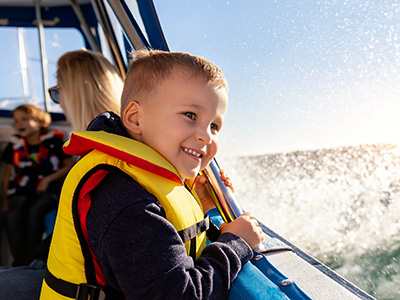
Speaking of lifejackets, this is one area where you can't compromise. Every child needs a properly fitted lifejacket—and "properly fitted" means one that fits them now, not one they'll "grow into."
For children, foam lifejackets are recommended over inflatable types. They're simpler, more reliable, and appropriate for younger boaties. Make sure any children's lifejacket has a crotch strap to prevent it riding up in the water. If you can fit more than two fingers between their shoulder and the jacket, it's too big.
For detailed guidance on choosing the right equipment, check out our guide on choosing the right lifejacket.
Teaching boating basics
Once safety foundations are in place, it's time to get your kids involved in the practical side of boating. The key is making it engaging rather than overwhelming.
Start with simple tasks appropriate to their age and ability:
For younger children (3-7 years):
- Coiling ropes and stowing cushions
- Learning basic boating vocabulary
- Understanding why we wear lifejackets
- Helping with simple pre-departure checks
For school-age children (8-12 years):
- Learning to read clouds and basic weather patterns
- Understanding navigation markers (red and green buoys)
- Helping chart courses and set GPS waypoints
- Rowing a dinghy or paddling a kayak
- Basic knot tying
For teenagers (13+ years):
- Emergency procedures and equipment location
- Radio operation and distress protocols
- Engine checks and basic maintenance
- Understanding tides, currents, and charts
- Taking the helm under supervision
The Coastguard Day Skipper course is perfect for families wanting to learn together. It covers boat handling, navigation, weather, safety equipment, and emergency procedures—giving everyone a solid foundation.

Finding the fun
Let's be honest - safety education alone won't make your kids fall in love with boating. You need to show them why it's enjoyable.
Watersports as a gateway
For many kids, watersports provide the excitement that transforms boating from "Mum and Dad's thing" to something genuinely fun. Start simple with tubing - it's accessible, thrilling, and doesn't require much skill. From there, you can progress to kneeboarding, wakeboarding, or waterskiing as confidence and coordination develop.
Our guide to water sports covers the safety essentials and equipment you'll need.
Sailing as a skill for life
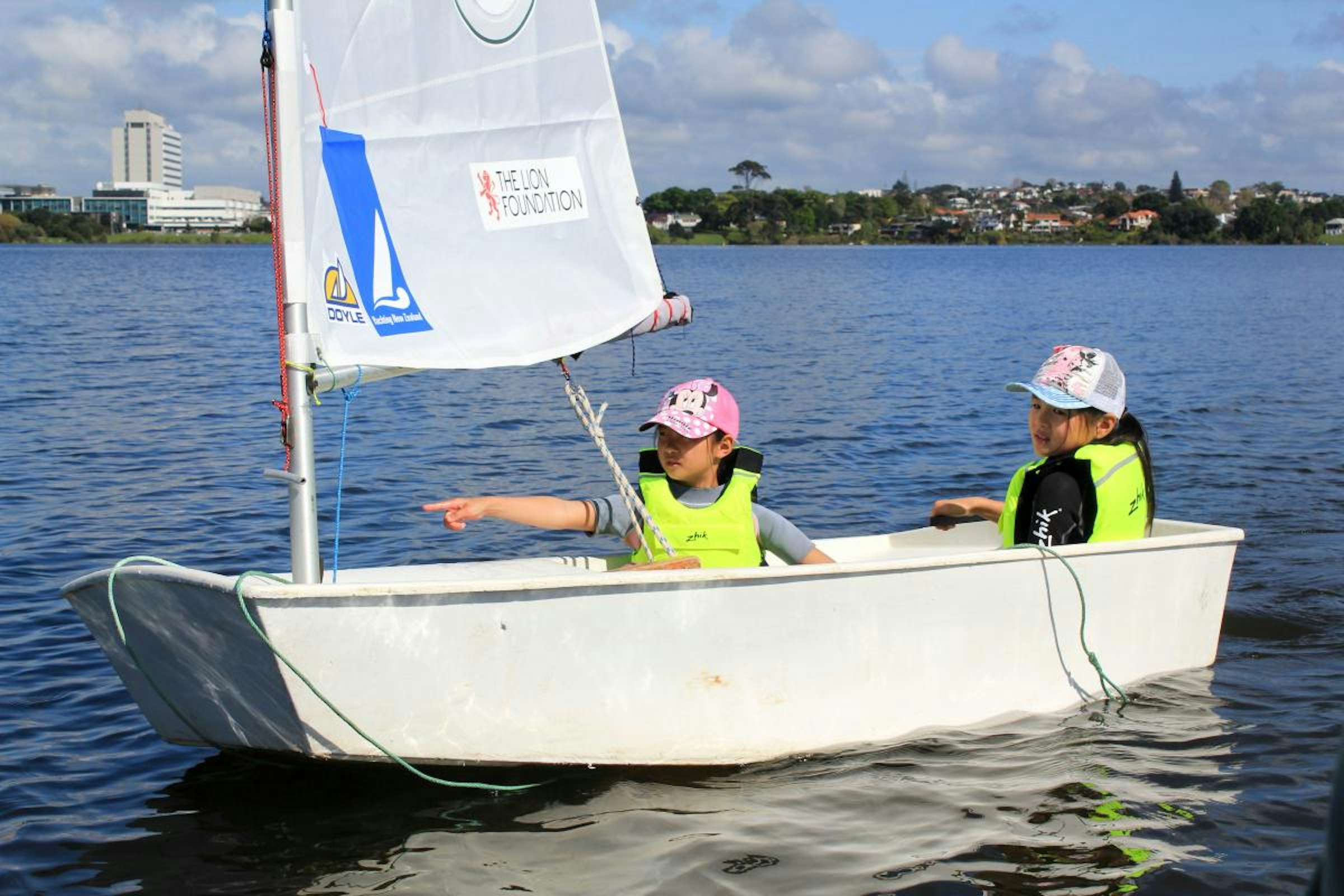
If your child shows interest in sailing, New Zealand has outstanding youth programmes. Yachting New Zealand offers nationally recognised learn-to-sail courses through affiliated clubs and sailing schools around the country.
Most yacht clubs run school holiday programmes for children aged 8-14, teaching everything from basic boat handling to racing skills. The programmes typically start with plastic Optimist dinghies—perfect for learning because they're stable, self-draining, and nearly indestructible.
The important thing with teaching children to sail is keeping it gentle. Kids will pick up confidence and concepts at their own pace, depending on their water comfort and coordination. Pushing too hard can put them off entirely.
Making it age-appropriate
One common mistake is expecting too much too soon. What's appropriate changes dramatically as children grow.
Toddlers and preschoolers need constant supervision and simple, light tasks. They're learning the environment more than actual skills. Consider childproofing your boat with netting on railings and secured cabin doors.
Primary school children can start taking on real responsibilities like rowing dinghies, understanding stability, and learning how to get safely in and out of small boats. This is when formal lessons become valuable.
Teenagers should know emergency procedures thoroughly—where safety equipment is located, what to do if someone goes overboard, how to use radios and EPIRBs, and positions like HELP (Heat Escape Lessening Position) to prevent hypothermia.
At every age, the golden rule is this: teach your kids the rules and the reasons behind them. Understanding that someone's life could depend on proper procedure makes the learning stick.

Why boating benefits kids
Beyond the obvious family bonding, getting kids into boating teaches valuable life skills. They learn responsibility, decision-making, problem-solving, and how to stay calm under pressure. Boating also encourages physical activity, time away from screens, and an appreciation for New Zealand's marine environment.
Research shows that families who boat together spend more quality time together—even during winter months when the boat's in storage. Kids who boat regularly tend to be more confident, outgoing, and comfortable taking on leadership roles.
Creating the right environment
Your own attitude makes all the difference. If you're stressed, impatient, or worried every time you go out, your kids will pick up on that tension. Make early trips short, pick calm conditions, and choose destinations with something interesting for children - a beach to explore, good swimming, or a café they enjoy.
Don't go out alone with young children if you can avoid it. Having another capable adult aboard means someone can handle the kids if you need to focus on navigating or dealing with weather changes. It also provides backup if something goes wrong.
And perhaps most importantly: keep it fun. Yes, safety is paramount, but if boating becomes all lectures and rules with no enjoyment, you've lost them. Balance the education with actual pleasure on the water.
Getting started
If you're ready to introduce your kids to boating, start with these practical steps:
- Ensure all children can swim confidently with a lifejacket on
- Get properly fitted lifejackets with crotch straps for each child
- Consider enrolling them in a safe boating programme
- Start with short trips in good conditions
- Give them age-appropriate tasks and responsibilities
- Make it fun with swimming, fishing, or exploring new places
Remember, the goal isn't to create professional sailors overnight. It's to help your kids feel comfortable, confident, and enthusiastic about being on the water. Take it at their pace, stay patient, and the passion will follow.
For more guidance on family-friendly boating in New Zealand, including specific safety considerations and age-appropriate activities, check out our detailed family boating guide.
Sources
Coastguard Boating Education, Yachting New Zealand Learn to Sail, Maritime NZ Recreational Boating Safety, Water Safety New Zealand, Coastguard Lifejacket Guidelines, Consumer NZ Lifejacket Guide, Maritime NZ Regional Boating Information