
How to Make a Rope-to-Chain Splice
When you drop anchor, the line connecting your anchor to the boat takes a lot of strain. Most boaties use a short length of heavy chain directly from the anchor, with a longer nylon rope connecting that chain to the boat. The chain sits on the seabed and handles the abrasion and weight, while the nylon rope coils up neatly on the windlass drum (the motorised winch that raises and lowers your anchor).
That means somewhere along your anchor setup, rope and chain need to be joined together. You can't use a shackle here: it'll jam in the windlass every time it comes through. What you need is a rope-to-chain splice.
A splice is a permanent join made by weaving the rope's own strands back into themselves and through the chain link. Done properly, it's stronger than a knot, smooth enough to pass through a windlass without snagging, and built to last several seasons before it needs redoing.
Here's how to make one with three-strand nylon rope, which is the most common rode material and the easiest to work with. We've also included what to know if you're working with double-braid.
What you'll need
- Three-strand nylon rope sized for your windlass
- Electrical tape or whipping twine
- A marlinspike or fid
- A lighter or heat gun
1. Whip the rope
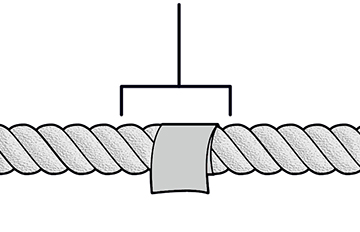
Wrap electrical tape firmly around the rope about 35-40 cm from the end. This is roughly 16 to 20 picks, where each pick is the width of one spiralling strand. Tape each individual strand end too, forming a small pointed cone at the tip. The cone makes weaving considerably easier.
2. Unlay the strands
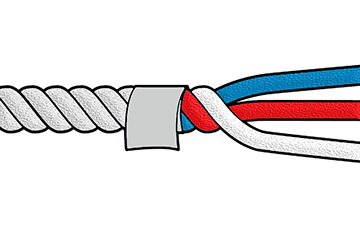
Untwist and separate the three strands all the way back to the whipping. Keep them organised so they don't tangle with each other.
3. Thread through the chain link
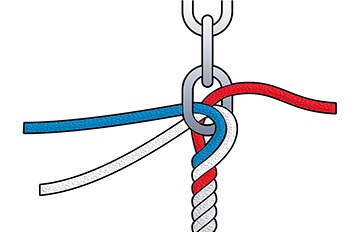
Pass two strands through the top link of your anchor chain in one direction, then thread the third strand through in the opposite direction so it sits between the other two. All three strands must go through the link. On a finished splice this can be hard to see, but all three need to be there.
Some boaties slide a short length of heat-shrink tubing into the chain link before threading the strands through. After the splice is finished, a heat gun shrinks it in place as chafe protection. It's a worthwhile step if your chain runs over a bare metal bow roller.
Tip: Secure the upper 30-45 cm of chain at a comfortable working height before you start. Trying to hold the chain up while splicing is frustrating and makes for a sloppy result.
4. Tuck and weave
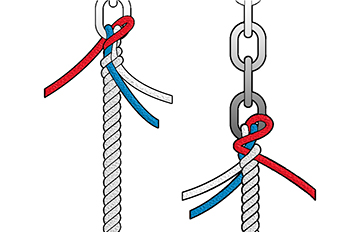
Weave each strand over and under the standing part of the rope in sequence. After each complete round of tucks, the three strands should splay out evenly from the standing rope like a tripod. A marlinspike makes it easier to open up the strands wide enough to pass through cleanly.
Keep each strand as tight and flat as possible as you go. A loose or twisted splice loses strength.
5. Taper and finish
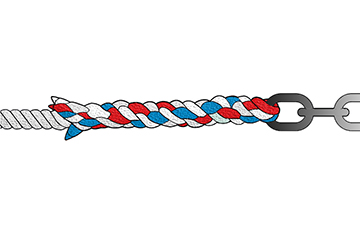
Complete at least seven full rounds of tucks. After the fifth round, taper the splice: do one extra tuck with two of the strands, then one final tuck with just one strand. This tapering helps the splice pass cleanly through a windlass chainwheel.
Pull everything tight. Trim each strand end to about 15 mm from the splice body, then melt the ends with a lighter or heat gun. The melted nylon fuses into the splice and prevents fraying.
What about double-braid rope?
Double-braid nylon rode is common on cruising yachts and larger launches. Splicing it to chain requires a different technique: the cover and the core are treated separately, and you need a hollow fid sized to your rope diameter to bury the cover back over the core correctly.
One thing to check before you commit to double-braid: not all windlasses handle it well. Three-strand and 8-plait rope grip a windlass drum more reliably. Check your windlass manual before choosing your rope type.
If you're doing a double-braid splice yourself, download the splicing guide published by your rope manufacturer. Samson and Marlow both provide detailed instructions specific to their rope. The sequencing matters, and getting it wrong means cutting back and starting again. For a critical piece of ground tackle, having a rigger do the splice for a modest fee is a reasonable call.
Keeping your splice in good shape
Inspect the splice at the start of each boating season and again after anchoring in rough conditions. Look for chafe at the chain link contact point, wear on the outer strands, and any signs of unravelling. Cut back and remake the splice if you see any real wear, rather than leaving it and hoping for the best.
If you're choosing rope for a new rode, use nylon rather than polyester. Nylon stretches under load, absorbing the shock from wave action. Polyester doesn't, and that extra stress goes straight to the windlass and the splice. Match your rope diameter to the windlass drum: too thick, and it won't coil properly, too thin, and it won't grip.