
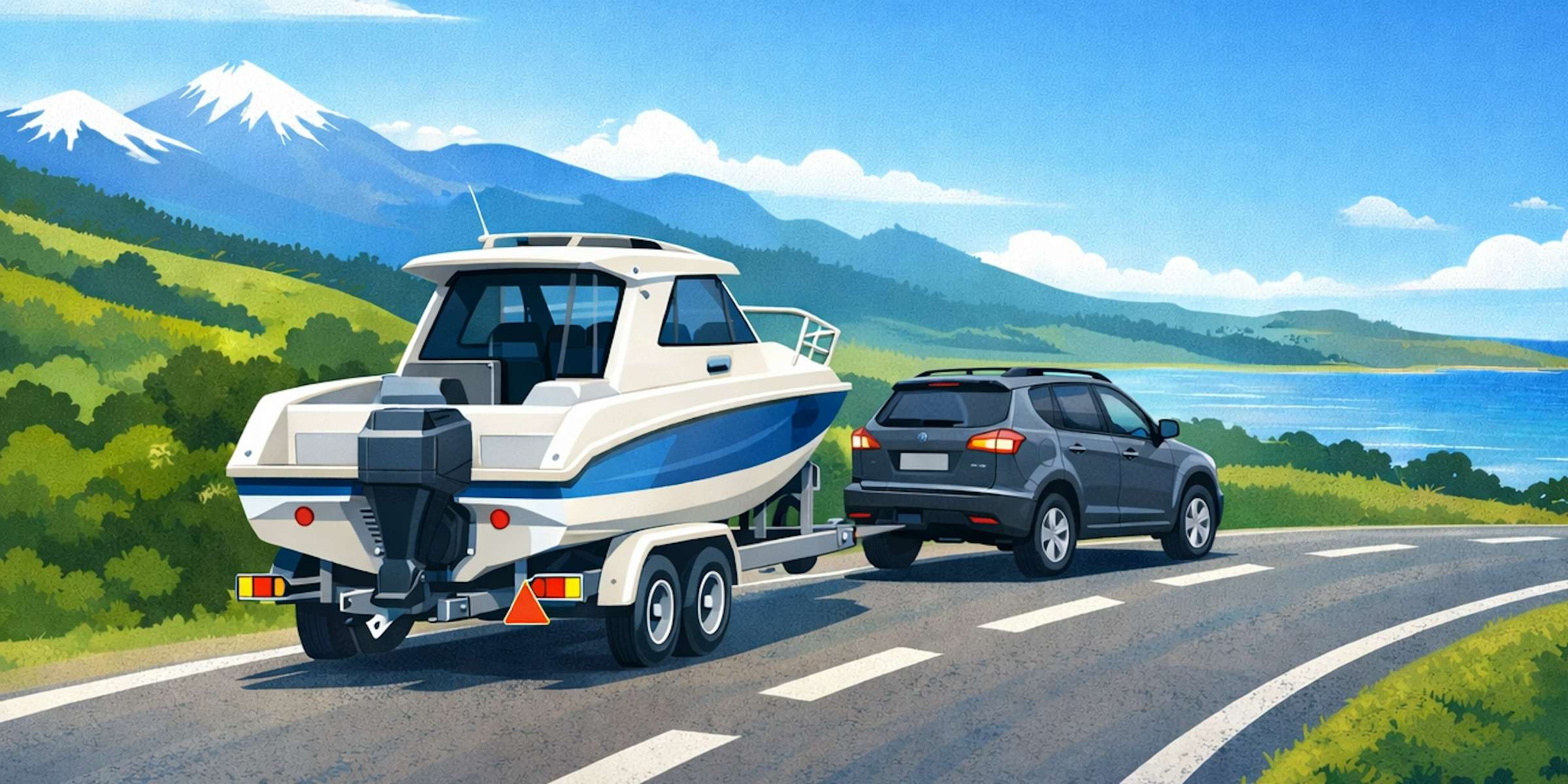
Towing a boat safely in New Zealand
Updated: February 2026 | Originally published: February 2022
Every summer long weekend, Kiwi boat ramps fill with trailers backing down the slipway. But getting your boat there safely starts well before you reach the water. Whether you're towing a tinny to the local estuary or hauling a big trailer boat across the country, understanding the rules and getting the basics right matters.
Know your towing limits
The starting point for safe towing is knowing what your vehicle can handle. NZTA recommends that the laden weight of an unbraked trailer should not exceed three-quarters of the unladen weight of your towing vehicle, and only if your brakes and tyres are in good condition. Every light vehicle and trailer combination must also be able to stop within seven metres from 30km/h. This is a legal requirement that limits what you can tow without trailer brakes.
If your boat and trailer weigh more than 2,000kg, service brakes are required. Above 2,500kg, you'll also need a parking brake and breakaway braking system. These aren't optional extras. They're legal requirements, and non-compliance could affect both your safety and any insurance claim if something goes wrong. The AA's towing guide has a good plain-English summary of these requirements.
Mariner Insurance's Aaron Mortimer has long encouraged boat owners to do their own homework on towing setups. "People need to do their own research," he says. "If we get queries of this nature, we always refer the client to NZTA for clarification about towing parameters, braking, and licensing."
Get the setup right
Weight distribution matters more than most people realise. Around 10% of the total trailer weight should press down on the towbar. Too little and the trailer can fishtail. Too much and your vehicle's steering and front-end grip suffers. Aim to have roughly 60% of the boat's weight forward of the trailer axle.
Your towbar and coupling need to be professionally fitted and rated for the job. Two tow ball sizes are in use in New Zealand (the older 1⅞-inch and the newer 50mm), and your coupling must match. Safety chains should cross beneath the drawbar, and all electrical connections need to work, including indicators, brake lights, and registration plate lighting. Trailers wider than two metres must also have forward-facing position lights.
Don't forget the paperwork. Your trailer needs a current warrant of fitness and registration, both clearly displayed.
Watch your wheel bearings
One of the most common (and preventable) towing breakdowns involves wheel bearings. After a long drive to the ramp, your hubs are hot. Backing straight into cold water causes the air inside the bearing housing to contract, drawing water through the seals and into the bearings. Saltwater makes this far worse.
The fix is simple: give your trailer at least 15 to 20 minutes to cool down before launching. Fitting bearing protectors (commonly called "Bearing Buddies") and keeping them well greased adds another layer of defence. Check bearings regularly by jacking up each wheel and giving it a spin. It should turn freely with minimal rumble.
Practise before you go
If towing isn't something you do regularly, there's no shame in heading to an empty car park to practise. Low-speed manoeuvres, reversing, and getting a feel for how your vehicle handles with a loaded trailer will build confidence before you're on the open road.
Remember that the maximum open road speed when towing with a rigid connection is 90km/h, and 50km/h if you're using a rope or non-rigid tow. Allow extra following distance, take corners wider than usual (the trailer tracks tighter than your vehicle), and if the trailer starts to sway, ease off the accelerator rather than hitting the brakes.
Aaron from Mariner notes that boats and towing setups have changed a lot over the past decade. "Particularly the big trailer boats," he says. Anglers and cruisers are towing further and more often than ever before, which makes getting the setup right all the more important.
Before every trip
A quick walkaround before you leave takes five minutes and could save your day. Check tyre pressures, test all lights, confirm safety chains are secure, and make sure your load isn't going to shift. If your boat extends more than 200mm beyond the sides of the trailer or more than a metre front or rear, you'll need to fit warning flags or hazard panels as required by Waka Kotahi.
Getting your towing right isn't just about avoiding fines. It's about getting your boat to the water and back safely. And when you've got the right trailer boat insurance backing you up, you can spend more time thinking about where to drop a line and less time worrying about what could go wrong on the drive.
Sources: NZTA, AA New Zealand, The Fishing Website